
AI agents have spent much of 2025 stuck between promising demos and hard-to-manage production reality. That started to change in October. OpenAI launched AgentKit on October 6, 2025, then followed on October 30, 2025 with Aardvark, an agentic security researcher designed to help teams find and fix vulnerabilities. Taken together, those releases point to the same shift: the market is moving from isolated chat experiments toward reusable, governed workflow systems.
That matters because enterprise buyers have spent the last year trying to bridge the gap between eye-catching agent demos and a tooling stack sturdy enough for production. The market is moving beyond proof-of-concept language, and teams increasingly need systems they can govern, explain, and improve over time.
What changed in October
AgentKit matters because it bundles several of the pieces teams usually had to assemble themselves. OpenAI introduced Agent Builder for designing and versioning workflows, Connector Registry for managing data and tool connections, ChatKit for embedding agent experiences, and stronger evaluation features for testing real behavior. That is a very different posture from simply shipping a model and leaving every enterprise to invent its own orchestration, tracing, and quality controls.
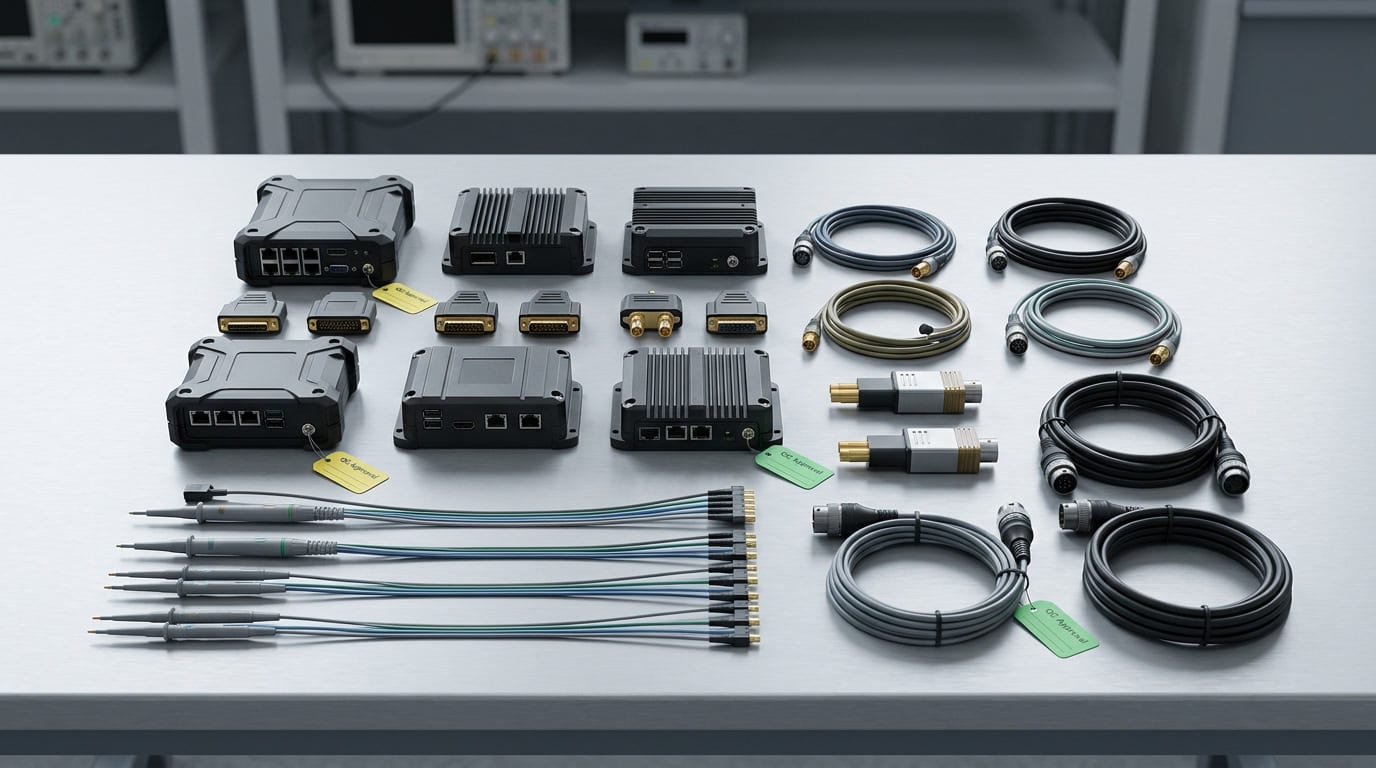
Aardvark adds an equally important signal. OpenAI positioned it as an autonomous security researcher that can analyze codebases, validate exploitability, and propose targeted patches. Even if a client never uses Aardvark directly, the release matters because it shows frontier model vendors are now packaging agent behavior around business outcomes like security operations, not only around generic conversation.
In practical terms, that shortens the path between a promising agent idea and a defensible pilot because teams do not have to invent the workflow, connector, and evaluation scaffolding from scratch. This is where the operating layer starts to matter more than another round of abstract AI excitement.
Why operators should pay attention
For operators, better tooling reduces the cost of starting. It also raises the bar for what counts as a serious implementation. Once workflows are visual, versioned, connected to internal systems, and measured with evaluations, it becomes much harder to treat agents as informal side projects. They start to look like systems that need ownership, access controls, monitoring, and clear rollback paths.
That is the opportunity for Sonique-style delivery work. Most clients do not need a general-purpose autonomous agent dropped into every system. They need one bounded workflow where the value is obvious: support triage, document research, internal knowledge access, proposal drafting, or a specialist assistant for a team that already follows a repeatable process. The October releases make that kind of scoped pilot easier to build, but only if governance is designed in from the start.
It also makes cross-functional review more concrete, because security, legal, IT, and the business owner can now discuss the same workflow with the same evidence instead of arguing around a vague demo. When that layer is missing, organizations usually mistake motion for maturity.
Ethical implications
The ethical question is not whether the system looks capable in a demonstration. It is whether it behaves responsibly when it touches codebases, internal documents, security workflows, and customer-facing support logic, and whether the people affected by it can understand, challenge, and correct the outcome.
That is why agent programs need explicit boundaries from day one. Teams should know which tools an agent can call, which data it can access, how intervention is logged, and who owns the workflow when outputs are uncertain or wrong.
There is also a leadership obligation here: teams need a review path that makes responsibility visible before an agent touches sensitive code, internal knowledge, or customer interactions. If that operating discipline is missing, the organization will still move, but it will move by pushing uncertainty onto staff and customers instead of resolving it upstream.
Where human judgment should still matter
Human involvement should remain strongest where security, escalation paths, or customer impact sit inside the workflow. AI can still speed up repeatable work, but the accountable judgment should stay with the people responsible for the outcome.
In this context, the best design is supervised agency, not unattended autonomy. Let agents orchestrate repeatable steps and gather context, while people stay responsible for connector approval, exception handling, and business-facing decisions.
This is where strong teams distinguish augmentation from replacement. The system can gather evidence, draft work, and surface likely next actions, while a person owns the threshold for approval, escalation, and exception handling. That design choice improves adoption because people can see how the system helps them instead of feeling that responsibility has been abstracted away.
Some narrow steps may become more autonomous as evidence accumulates. Even then, the progression should be earned through evaluation and intervention data, not assumed because the demo looked smooth.
The teams that pull ahead in this area will treat agent deployment as a workflow design discipline rather than a model novelty contest. They will build enough process to learn quickly, enough governance to keep trust intact, and enough operational ownership to improve the system after the first release. That is what separates a promising AI initiative from one that becomes part of the business. In practice, the winners will look less like organizations chasing autonomous magic and more like organizations building repeatable, accountable systems that people will actually use.
For mid-market operators, the real opportunity here is not that agents suddenly became simple. It is that the foundational layer is becoming less bespoke. That allows more of the implementation effort to shift toward workflow design, permissioning, evaluation, and rollout discipline instead of rebuilding basic scaffolding every time. When that shift happens, teams can start comparing agent ideas by operational fit rather than by novelty. That is a healthier basis for investment, because it keeps attention on where the system belongs, how it should be supervised, and what evidence should count before broader deployment.
Over the next year, the strongest teams will use this tooling shift to standardize how pilots are framed. They will define one ownership model for agents, one review path for connectors and data access, one method for measuring intervention rate and business value, and one expectation for where human oversight remains mandatory. Those teams may appear less experimental on the surface, but they will learn faster in practice because each pilot will generate reusable operational knowledge rather than isolated demo success.
The ethical advantage of that approach is practical as well as principled. When agent programs are designed around explicit ownership, visible review, and bounded authority, teams can move faster without normalizing opaque delegation. That keeps trust intact for staff and clients alike, and it gives leadership a clearer basis for deciding where automation can safely expand and where accountable human oversight must remain non-negotiable.
What teams should do next
- Choose one repeatable workflow where speed, consistency, or knowledge retrieval already matter to the business.
- Define an evaluation plan before building, including quality thresholds, handoff rules, and failure modes.
- Map the connectors, permissions, and logging requirements up front so the pilot can scale cleanly if it works.
Do not start with an org-wide agent mandate.
The better move is to prove one governed workflow end to end, then expand from evidence rather than enthusiasm.
As of November 3, 2025, the most important takeaway is not that agents are suddenly solved. It is that the tooling layer is catching up fast enough for enterprises to move beyond one-off prototypes. The winners will be the teams that combine that new tooling with disciplined workflow design, measurement, and governance.